|
Search
This Site
Will
You Be In The Kingdom of God...
and
The First Resurrection?
Or Will Your
Attitude Leave You
In The Second Resurrection?
|
 07/23/2024
Introduction
 This
article is written for the benefit of those
Christians
who have an understanding and appreciation of what will
happen in the first resurrection at Christ's second
coming, as originally taught by the late
Dr.
Ernest L. Martin (1932-2002). It
is assumed that the reader already understands that
all
have been saved and that
we
are destined to become part of the God family. This
will be accomplished through
two
future resurrection periods,
as revealed in the Bible (Salvation
and the Kingdom of God
and
The
Time Periods for the Resurrections.) This
article is written for the benefit of those
Christians
who have an understanding and appreciation of what will
happen in the first resurrection at Christ's second
coming, as originally taught by the late
Dr.
Ernest L. Martin (1932-2002). It
is assumed that the reader already understands that
all
have been saved and that
we
are destined to become part of the God family. This
will be accomplished through
two
future resurrection periods,
as revealed in the Bible (Salvation
and the Kingdom of God
and
The
Time Periods for the Resurrections.)
For those with an interest in end-time prophecy, note that
all
prophecies happen in "threes." More end-time
information can be
found
here. It should be noted that for most people who are
selected for the kingdom of God, it will seem (to them)
to immediately commence upon their death, as death is
like a "sleep".
When they wake up, regardless of the length of time they
have been dead, they will be in their physical form.
Then, in a "twinkling
of an eye," they will be transformed into spirit
beings into the kingdom of God.
For those who do not believe in the Bible, its
relevancy, its divine inspiration, or think that the Bible is in error, or that
there are other books of equal value inspired of God, I
encourage the reader to read the article,
A
Major Proof of the Bible, and also the book,
Restoring
the Original Bible, which you can read online in it's entirety.
This article and book prove that the Bible is the
only
inspired word of God. Of course, actually
reading the Bible
cover to cover is highly recommended and enlightening.
It is, after all, the most popular book in the
world.
And it is the way in which God
has chosen to communicate with us.
Watch the Mind of God video below, narrated by
Morgan Freeman. It could change your life.
The Bible mentions the
"kingdom of
God"
69
times and the "kingdom of heaven"
32
times, making the subject a significant part
of scripture that most Christians do not properly
understand.
Both names are used to describe the same entity. The
kingdom of heaven will come to earth upon the second
coming of Christ and will then be known as the kingdom
of God.
While this article is well researched and documented, it
certainly is not the final word on the subject. Much
more research needs to be done to do the subject
justice. There are many links at the bottom of the page
of other authors who have also written excellent
articles of a similar or contributing nature.
Jesus said:
-
Blessed
and holy is he that hath part in the first resurrection: on such the
second death hath no power, but they shall be priests of God and of
Christ, and shall reign with him a thousand years.
Revelation 20:6
-
But
seek ye first the kingdom of God.
Matthew
6:33
-
To
the apostles on one occasion, "To you it has been given to know the
mystery of the kingdom of God; but to those who are without, all things
are done in parables."
Mark
4:11
-
But he replied, “I must preach the Good News of the Kingdom
of God in other towns, too, because
that is why I was sent.”
Luke 4:43
|
|
 Please be sure to click on
all of the colored
hyperlinked text to obtain a
full
understanding of the subject. This article has been
considerably
shortened by the usage of
hyperlinks, eliminating the need to reproduce other
supporting articles (to provide a more accurate and clearer explanation
to the reader.) This hyperlink principle is similar in
function to that of Christ speaking in
parables,
then (at a later time) explaining the full meaning of
his message to those who were truly interested. Please be sure to click on
all of the colored
hyperlinked text to obtain a
full
understanding of the subject. This article has been
considerably
shortened by the usage of
hyperlinks, eliminating the need to reproduce other
supporting articles (to provide a more accurate and clearer explanation
to the reader.) This hyperlink principle is similar in
function to that of Christ speaking in
parables,
then (at a later time) explaining the full meaning of
his message to those who were truly interested.
|
Who
Will Not Be in the Kingdom of God Or the First Resurrection
Many
Christians believe that they will be in the kingdom of God or the first
resurrection. But are
they really qualified? Here is what the Bible states about who will
definitely not be in the kingdom of God or the first resurrection. Dr. Martin
states (in blue):
A
person who continues deliberately practicing sinful acts, that he or she
knows to be wrong, may even be chastised to the point of not making the
first resurrection. The first resurrection (which the apostle Paul
called in Greek “the out-resurrection” in Philippians 3:11) is a
reward Christ gives to those diligent in their practice of good works
and a reasonable conduct of life. Those brought forth from the dead at
Christ’s Second Advent, will see the thousand year reign of Christ on
earth known as the Millennium (Revelation 20:1–5). But those who
persist in sinfulness and unrighteousness will not witness that glorious
reign of Christ known as the Kingdom of God. Paul warned Christians who
persist in evil:
“Know
you not that the unrighteous shall not inherit the Kingdom of God? Be
not deceived: neither fornicators, nor idolaters, nor adulterers, nor
effeminate, nor abusers of themselves with mankind, nor thieves, nor
covetous. nor drunkards, nor revelers, nor extortioners, shall inherit
the kingdom of God. And such were some of you: but you are sanctified,
but you are justified [declared righteous] in
the name of the Lord Jesus, and by the Spirit of our God.”
“For
this you know, that no whoremonger, nor unclean person, nor covetous
man, who is an idolater, has any inheritance in the kingdom of Christ
and of God.”
They
will have to wait much later until the dispensation of the fullness of
times (Ephesians 1:10) before they will be resurrected to attain the
salvation that God has granted to us through His grace.
The
time for the Kingdom of Christ and of God is the Millennium period—the
one thousand-year rule of Christ. The apostle Paul said that the rule of
the kingdom would last even beyond the period of the Great White Throne.
It will conclude at the end of the dispensation of the fullness of time
when Christ conquers the last enemy “death.” This is when the final
resurrection of the dead takes place and there are no more individuals
remaining in the “death-state.” This is the resurrection at the end
[in Greek: the telos] when even death itself is destroyed. At
that time Christ will hand all rule back to the Father. This is when the
kingdom (that He governs on God’s behalf) will end.
“Then
comes the end [the telos, the last resurrection at
the end], when he [Christ] shall
have delivered up the kingdom to God, even the Father.”
[Author's note: This "last resurrection" is in reality a consummation,
as there are only two resurrection periods.]
It
would be a sad thing if any Christian missed out on experiencing the
Kingdom of Christ and God that will occur on earth and in other areas of
the heavens. But only those who are in the first resurrection (taking
place at Christ’s Second Advent) will witness that glorious period of
time throughout its full span. This is the reward that each Christian
receives who does not reckon grace as an opportunity to continue doing
wrongful acts.
2
The
apostle Paul made it clear that those who repudiate the doctrine of
God’s grace, and treat it with disdain or in a frivolous manner, will
not be resurrected with such attitudes or given the reward of the
kingdom phase of history. This will be the most majestic period that
mankind will ever witness. It would be a great calamity to each person
who misses the Kingdom of God.
In
fact, if a person sins willingly after having come to the knowledge of
the truth on what grace really means, and begins to treat it with
disrespect and dishonor, sore consequences can come to the person in
this life and he or she in the future will not experience the Kingdom!
“Now
the works of the flesh are manifest, which are these; adultery,
fornication, uncleanness, lasciviousness, idolatry, witchcraft,
hatred, violence, emulations, wrath, strife, seditions, heresies,
envyings, murders. drunkenness, reveling, and such like: of the which
I tell you before, as I have also told you in time past, that they
which do such things shall not inherit the kingdom of God.”
Mankind
is warned to practice the principles of right living, which after all is
only a reasonable requirement for the happiness and well being of
civilized man. But for those who persist in wrong living, the Book of
Hebrews has some strong words to say to them.
“For
we know him that has said, ‘Vengeance belongs unto me, I will
recompense,’ saith the Lord. And again, ‘the Lord shall judge his
people.’ It is a fearful thing to fall into the hands of the living
God.”
God
tries to rescue His people from falling into a lifestyle of wrong
living. We read further in the Book of Hebrews:
“For
whom the Lord loves, he chastens, and scourges, every son whom he
receives.”
And
God can chastise severely.
“Behold
therefore the goodness and severity of God: on them which fell,
severity; but toward you, goodness, if you continue in his goodness:
otherwise you also shall be cut off.”
Without
actively trying to practice right living principles, people can be
“cut off" from such rewards as the Kingdom of God. This does not
mean, however, that the grace of God would be thwarted and people will
not eventually be saved. Before these dire warnings were given in the
Book of Hebrews, the author was aware that God “hath perfected FOREVER
them that are sanctified” (Hebrews 10:14). Ultimate salvation is
something all humanity will experience. That is something that has been
secured by Christ for mankind without the works of man (either good or
bad) being involved. Yes, everyone will be saved and brought to a full
knowledge of the truth of God.
“Who
[God] will have all men to be saved and to
come to a knowledge of the truth.”
True. All humans will finally repent
of their sins and wrong attitudes and be forgiven their sins. They will
be reconciled to God.
“For
the love of Christ constrains us, because we thus judge, that if one
died for all, then were all dead. ... And all things are of God, who
has reconciled us to himself by Jesus Christ, and has given to us the
ministry of reconciliation; to wit, that God was in Christ reconciling
the world UNTO HIMSELF, not imputing their trespasses unto
them; and has committed unto us the word of reconciliation.”
“That
in the dispensation of the fullness of times he might gather together
in one all things in Christ, both which are in heaven, and which are
on earth, even in him.”
“And
having made peace through the blood of his cross, by him to reconcile
all things unto himself; by him, I say, whether they be things in
earth, or things in heaven.”
“That
at the name of Jesus every knee should bow, of things in heaven, and
things in earth, and things under the earth; and that every tongue
would confess that Jesus Christ is Lord, to the glory of God the
Father.”
This
last verse shows a voluntary and willing submission and confession to
Jesus Christ to the glory of God. This is true because the apostle Paul
showed that such confession is inspired by the actions of the Holy
Spirit on such individuals (1 Corinthians 12:3). If one checks every
occasion in the Old or New Testaments where the word “to confess” or
its cognates are used, it will be seen that it is always placed in a
context of persons using their “free will” and with heartfelt
contrition. This scripture thus shows that all things in heaven, on
earth and under the earth (the angels who are kept in chains in the
bowels of the earth) will one day willingly proclaim the Lordship of
Christ to the glory of God the Father.
And
though every person will eventually find salvation in the dispensation
of the fullness of times, those who persist in evil acts can miss out on
the glorious period known as the Kingdom of Christ and God. Those who,
“sin
willfully after that we have received the knowledge of the truth,
there remains no more sacrifice for sins.”
This
applies to those who count “the blood of the covenant, wherewith he
was sanctified, an unholy thing, and hath done despite unto the Spirit
of grace” (Hebrews 10:29). This type of sin is called “the blasphemy
against the Holy Spirit” that Christ talked about (Matthew 12:31) and
referred to by the other apostles (James 5:20; 2 Peter 2:20–21; 1 John
5:16). Yet this sin is not unpardonable in the ultimate sense. It is
only “unpardonable” during this present age (up to the Second Advent
of Christ) and in the next age to come (when the Kingdom of Christ
appears on earth and lasts for the Millennium). That is what Christ
taught. Note carefully.
“All
manner of sin and blasphemy shall be forgiven unto men: but the
blasphemy against the Holy Spirit shall not be forgiven. And whosoever
speaks a word against the Son of man, it shall be forgiven him: but
whosoever speaks against the Holy Spirit, it shall not be forgiven
him, neither in this world [Greek: age],
neither in the world [age] to come
[the Millennium]!”
This
sin is different from ordinary sins because in this case the person who
knows better actively and deliberately turns against what he recognizes
to be the truth. Such people are doing “despite unto the Spirit of
grace.” Unlike we who can have our sins forgiven in this age and when
Christ returns to have all our sins forgiven at the judgment when the
Kingdom of Christ appears on earth (at the start of the Millennium),
these abject sinners who do despite unto the Holy Spirit will not be
forgiven in this age, nor during the Millennium. They will not be living
during the Millennium to gain forgiveness of sins.
Christ
did not mean, however, that these vile sinners would never be forgiven
sins in all circumstances. They simply will miss out on the blessings of
forgiveness in this present age and miss out on seeing the rule of
Christ on this earth during the Millennium and the judgment of the Great
White Throne. When they are finally resurrected at the beginning of the
dispensation of the fullness of times (Ephesians 1:10), they will look
back and see what they missed out on as a reward. They (and the
spiritual powers in the heavens that have sinned and caused mankind to
sin abundantly) will then submit to Christ and confess His Lordship to
the glory of God. Recall again the teaching of the apostle Paul on the
ultimate harmony to emerge between God and man, and between God and all
spiritual powers in the heavens, on earth and under the earth.
“That
at the name of Jesus every knee should bow, of things in heaven, and
things in earth, and things under the earth; and that every tongue
should confess that Jesus Christ is Lord, to the glory of God.”
The
proper way, therefore, is to remain faithful to Christ. If people
blatantly persist in the practice of evil and abandon all conscience
toward evil, such people will suffer great losses. Not only can such
people be handed over to Satan the Devil for punishment now, but also
they will miss out on experiencing “the world to come.” This is why
the apostle Paul was so severe in his writings toward outrageous sinners
who persisted in their sins and break off any attempt to repent of them.
He said, “Deliver such an one unto Satan for the destruction of the
flesh, that the spirit may be saved in the day of the Lord Jesus”
(1 Corinthians 5:5). And, “If any man’s work shall be burned,
he shall suffer loss: but he himself shall be saved; yet so as by
fire” (1 Corinthians 3:15).
Eventually
they will, much later in the dispensation of the fullness of times
(Ephesians 1:10), finally be reconciled to God and be saved. There is
not the slightest doubt that all mankind will be saved at that time. God
assures this.
Salvation
Is Assured; the Kingdom of God Is Not
At
this point it is essential to remind ourselves of one major doctrinal
fact. The important phrase “Kingdom of God and Christ” is not to be
equated solely with the teaching of “salvation.” The “Kingdom of
God” is part of a salvation, in the sense of a reward
to those brought
up from the dead at the first resurrection, but it does not represent
the totality of salvation itself. The fullness of salvation is to
experience being born into the very family of God and this will happen
to all in the dispensation of the fullness of times. To be in the first
resurrection means that we will witness and experience the Kingdom of
God as well. It is an extra reward that all of us in Christ will receive
if we remain faithful and thankful to God for what Jesus Christ has done
for us. This is what Paul was endeavoring to experience by being in the
“out-resurrection” — the first resurrection that occurs at
Christ’s second advent — and this is what he wanted for all the
Christians to whom he wrote. In effect, those of us who remain faithful
in this age will inherit salvation and the Kingdom of God (the reward)
at Christ’s advent. And while all will eventually gain salvation, all
will not experience the reward — the Kingdom of God and Christ. It is
just that simple!
Again,
Dr. Martin provides us with another
article
(in blue):
A
Warning
While
our salvation is assured, we should always be about our Father’s
business and living in a righteous way that contributes to the glory of
Christ Jesus. We should always be pleasing Christ and the Father with an
upright and proper conduct of life. On the other hand, if we want to
live like the world after knowing this wonderful truth of "the
Mystery," we can miss out on the Millennial Kingdom phase of
salvation (Eph.5:5). But, if God and Christ are delighted with our
conduct in this life, they will resurrect us in the first resurrection
and let us enjoy the Millennial Kingdom phase of salvation (Revelation
20:4,5), Yet, if we continue to live like the rest of the world, we will
be brought to salvation all right, but God will let us inherit it with
the rest of the world -- when the world gets their salvation "in
Christ" the world obtains their salvation only after
the Kingdom phase of a thousand years reign of Christ is over.
Paul
warned all of us who understand the teaching of "the Mystery":
"For this ye know, that no whoremonger,
nor covetous man, who is an idolater, hath any inheritance in the
kingdom of Christ and of God" (Ephesian 5:5). If we do
not please God the Father and Christ Jesus in our earthy lives, they may
well consider it appropriate not to grant us our salvation until the
thousand year "Kingdom phase" is over.
When
people read in the New Testament of those who may not make it into their
inheritance, it is always speaking about the "Kingdom phase"
of salvation, not salvation itself which has been absolutely secured to
the human race through the works and efforts of Jesus Christ, our Elder
Brother. All men will indeed be saved (I Timothy 2:4), but Paul said
mankind will only be granted a salvation "in
its own seasons" (I Timothy 2:6, see original Greek).
Salvation is awarded at different times, We should want to do good works
now in order to please the Father and Christ. If we do, we can have the
assurance that we will be in the first resurrection and enjoy along with
Abraham, Moses, David, the apostles and others, the "Kingdom
phase" of salvation. Let us remember, though all mankind is
guaranteed a salvation through the works of Christ, all do not receive
it at the same time (I Timothy 2:4-6).
We
should always be diligent in doing good works. And we should also meet
all our human obligations to our families and to our societies that are
within the boundaries of moral and ethical principles of fairness that
are found within the biblical revelation. Our legal position of
presently being on the right hand of the Father, is a position only
recognized by the Father and Christ Jesus. Mankind does not look on us
as having this august standing as the very children of God. So, all
legitimate obligations we have with the rest of mankind should be
fulfilled by Christians. For example, if we have a contract to pay a
department store money for a product we received from them, we should
pay the store precisely and meet all the obligations of the contract.
True, any default will not jeopardize our salvation in Christ, but our
wrong attitudes could keep us from experiencing the "Kingdom
phase" of salvation and we can inherit many ills during this life
by our wrongdoing.
Who Will Be in the
Kingdom of
God?
Attitude Is
Everything
 If "many are called and few are
chosen," what is the criteria for us as twenty-first century Christians
of the "Information Age" (that separates us from Christians of
yesterday)?
Is there an underlying characteristic that Christians may have that predisposes
a very possible denial of admittance into the
kingdom
of God? Does one have to qualify? If "many are called and few are
chosen," what is the criteria for us as twenty-first century Christians
of the "Information Age" (that separates us from Christians of
yesterday)?
Is there an underlying characteristic that Christians may have that predisposes
a very possible denial of admittance into the
kingdom
of God? Does one have to qualify?
Could that characteristic be attitude?
Our attitude towards our fellow man, God, the Bible,
and
learning (in this easy Information Age)? A "child-like"
attitude?
If a negative attitude is the
sin
against the holy spirit, as Dr. Martin so aptly points out
in his article, could a negative attitude also preclude us from admittance into the
kingdom of God? Could attitude be everything? Can we
lose our
salvation?
How
often do we seek God's will —
and His word (as revealed in the Bible?) How often do we search the
scripture for the truth about new ideas and concepts. When we are taught
something new, what is our attitude about it? Is it one of immediate denial?
Or
is it one of, "I'm not sure about that, but I am going to properly
research it to see if it is of God?"
With
a good proper attitude, let us now examine some possible evils and sins that
just might preclude us from the kingdom of God.
The
Ignorance of Evil and Sin in Our Twenty-First Century
While most Christians of today lead rather
peaceful lives and know the difference between right and wrong in most
matters, there are still some evils and sins they may be practicing that
they may not even be aware of.
Four of these may be:
-
1.
 The
evil of murder. While most Christians behave themselves on a personal
level and certainly don't consider themselves criminals, they
ironically condone a certain form of murder. They have no problem in
mentally, physically or spiritually supporting the concept of
warfare.
They surreptitiously support (at least in in their hearts and minds) the U.S. government's (and
other similar governments) ongoing wars of attrition (U.S. Trump years
excluded,) buying
into the bogus excuses of protection from "terrorism." Many
other Christians still buy into the facade of "fighting for
freedom" (such as in the last two world wars, Korea and Vietnam). They refuse to
read any
books
or articles
on the subject or to educate themselves and others on the evils of
warfare and how these wars are really contrived, managed and financed
by the bloodline ruling
elite that God allows to rule the world
under Satan. They
buy right into the propaganda promoted by our rulers and fall for the
government's historic
false
flag operations. Worse, they defer to the
Old Testament or out-of-context New Testament scriptures as
their biblical validation. The concept that warfare is a
Satanic ploy to eliminate the male species is never entertained. If we
cannot discern this evil and sin now, will we have to learn it in the
second resurrection? The
evil of murder. While most Christians behave themselves on a personal
level and certainly don't consider themselves criminals, they
ironically condone a certain form of murder. They have no problem in
mentally, physically or spiritually supporting the concept of
warfare.
They surreptitiously support (at least in in their hearts and minds) the U.S. government's (and
other similar governments) ongoing wars of attrition (U.S. Trump years
excluded,) buying
into the bogus excuses of protection from "terrorism." Many
other Christians still buy into the facade of "fighting for
freedom" (such as in the last two world wars, Korea and Vietnam). They refuse to
read any
books
or articles
on the subject or to educate themselves and others on the evils of
warfare and how these wars are really contrived, managed and financed
by the bloodline ruling
elite that God allows to rule the world
under Satan. They
buy right into the propaganda promoted by our rulers and fall for the
government's historic
false
flag operations. Worse, they defer to the
Old Testament or out-of-context New Testament scriptures as
their biblical validation. The concept that warfare is a
Satanic ploy to eliminate the male species is never entertained. If we
cannot discern this evil and sin now, will we have to learn it in the
second resurrection?
-
2.
Matthew
25:31–40. On August 24, 2006, on a Christian
forum,
I asked a question, "Do we believe in Matt.
25?" The question generated 444 views and 13 replies. Many years
later, the topic was reintroduced on another
forum, with additional
responses. Out of all of the responses from both postings, only one
person would admit to fulfilling this scripture. All the other
responses were a complete copout on why they didn't need to fulfill
Christ's command. One person amazingly suggested we shouldn't even talk about it,
as that would be boasting. I had to shake my head in utter disbelief
that such an attitude could prevail among alleged Christians.
Again, I ask the
question, if we cannot learn the lessons of Christian charity and love
(the very antithesis of evil and sin) for our fellow man in this lifetime,
will we have to learn it in the second resurrection? To
quote Dr.
Martin:
-
In
summing up this chapter on giving monies to Christ for the
spreading of the Gospel to the world (that all of us should be
active in doing), I wish to give a final method by which anyone
can be assured that what money or contribution is given goes
directly to Christ. This is a sure way that no one who loves
the New Testament teaching can argue with. The teaching comes from
Christ himself. Christ told people this certain way to give things
directly to Him,
-
"When
the son of man shall come in his glory, and all the holy angels
with him, then shall he sit upon the throne of his glory. And
before him shall be gathered all nations: and he shall separate
them one from another, as a shepherd divideth his sheep from the
goats... then shall the King say unto them on the right hand,
Come, ye blessed of my father, inherit the Kingdom prepared for
you from the foundation of the world: for I was an hungered, and
ye gave me meat: I was thirsty and ye gave me drink: I was a
stranger, and ye took me in: Naked and ye clothed me: I was in
prison and ye came unto me."
-
• Matthew 25:31–40
-
Christ went on to
say that the righteous might be puzzled over this, because none
of them ever gave Christ these things personally. But Christ
went on to say: If you have "done it unto one of
the least of these my brethren, YE HAVE DONE IT UNTO ME"
(Matthew 25:40).
-
There we have it!
This is the assured manner to give something to Christ. If you
help out the unfortunate brother in Christ, you have given
something directly to Christ,
"Ye have done it
unto me."
What
Jesus is speaking of is what we today call "Christian
charity." The problem is that most Christians don't practice it.
Most are deluded into thinking that all of mankind's needs are already
met through government sponsored programs of one sort or another.
Little do they know or care that these programs do not address all of
mankind's needs. Those that are "retired" and have the most
time to contribute and help (and often have the most financial resources to
contribute) seem to be the least concerned. Living the promised "good
life" seems to be their preoccupation.
-
3.
Health
—
and the lack thereof. It is truly amazing that most Christians have
absolutely no concept of good health. They buy right into the
evil/satanic/allopathic/medicine/drug
culture (pharmakeia)
that prevails in our society today
—
and which was also in
existence
at the time of Christ. While healing the sick was one of the miracles
performed by Christ, most Christians continue to blindly destroy their
very own bodies
—
and those of their precious children. Drugs and
vaccinations are almost
never
questioned, despite the large amount of
evidence as to their ineffectiveness and dangers. New mandatory
government requirements in Australia and in three states in the U.S.
now require that all children be
vaccinated. This is a
subtle form of genocide that has gone unrecognized by both the
Christian community and the world as a whole.
A wealth of
information is now available
online
on good,
natural health. But most Christians choose to ignore it and continue
to rely on their
allopathic
doctor. This in itself is a violation of the first commandment, by
putting another god before the true God. Dr. Martin
states:
Is
this the way we show respect for God's temple? Is this the way we set
an example for the world? By putting poisons in
our body
—
and our children's bodies? By eating the improper
acidic
foods that cause us to get sick
— and refusing to eat the
biblical foods found in the
Garden of Eden? By refusing to take the wonderful
supplements
God has graced us with to
help keep us full of energy and free from
sickness?
Again, if we cannot
discern evil and sin
in this lifetime, will
we have to learn of it in the second resurrection?
Starting in the year 2020, mankind suddenly was thrust into a
"plannedemic" of epic proportions. The entire world was overnight set
up for an eventual genocide. Amazingly, most people (including
Christians) cannot see it for what it really is. The result is that
people in general, families, friends and co-workers have been torn
apart in their response to the issue. Documentation on the
medical,
political, and
religious aspects are
well documented on this site. Still, most are blinded to the obvious
truth. And yet we are to be called to be teachers to the world?
4.
Imprisonment
— and the lack of concern for
our fellow human beings. Most Christians would be shocked to learn
that our entire American judicial/law enforcement/prison system has
morphed into what I call
The
American Gulag System, a duplicate of the old Soviet Stalinist gulag system. Fair justice is rarely delivered. Starting with
the wrongfully convicted, we have 20% of the prison population serving
time for crimes they did not commit. Then we have unjust punishments for
many people who serve harsh sentences way out of proportion to the crimes committed.
Half of all prisoners are in for drug related offenses. And half of them
are non-violent. Locking these people up has done little to curtail the
drug problem. Ironically, the "legitimate" drug industry
continues to operate unscathed, producing toxic drugs that maim and kill
people on a daily basis, all prescribed by our friendly doctors.
Then we have prison conditions, which for many is simple slavery in a
prison industry where they have to work for pennies on the dollar —
and putting people on the "outside" out of work. Medical services and healthy
food are scarce and/or of poor quality, often resulting in a long term
death sentence. The list of dehumanizing conditions is endless.
The
concept of rehabilitation was done away with decades ago, except in
Europe, where many prisons are being shut down due to their
rehabilitation success. They actually treat prisoners like human
beings, rather than caged animals like we do in the U.S.A.
And
what did Jesus have to say about those in prison? He said, "...I
was in prison, and ye came unto me." Matthew 25:36. When was the
last time you visited someone in prison? When was the last time you
offered to help someone who is wrongfully convicted? Can you even
imagine what it is like to be imprisoned? Do you even care? Will
compassion and concern for others have to be learned in the second resurrection?
Where Does Attitude Really Come From?
Attitude
comes from "desire." Desire to do what God says to do.
Desire to please God. The Bible has
many
scriptures on the subject of desire. How badly do you want
to do God's will?
Is It a Lottery — or a
Reward?
Yes, there is a lottery. The fact that you are reading this
article (and others) is that lottery. You were chosen to be
given the opportunity to understand the kingdom of God by
lottery. Most people in the world have not yet been given that
opportunity. But you still haven't won a winning ticket for
entrance into the kingdom of God.
The practice of the above four evils and sins would appear, in my mind, to cast doubt on one's
qualification for the kingdom of God or the first resurrection. All four of these evils and
sins have one thing in common; they deal with the very essence of life
itself —
and the expansion of the family of God. They deal with how we
(and/or others) will live or die in this lifetime. If we cannot
understand these basic concepts now (through biblical and non-biblical education, life
experiences and
guided by the Holy Spirit), then when
will we learn them?
Worse,
these evils and sins
represent an unloving, unrepentant attitude.
Attitude is key to
obtaining admittance into the kingdom of God. Those who we know (through
scripture) that will be
in the kingdom of God all had one thing in common; they all had the
right attitude!
 The
main advantage that twenty-first century Christians have
over those who have gone before us is the vast amount of knowledge
available to us. We live in what is termed the "Information
Age." We have more information available at our fingertips than most
people in previous eras had in a lifetime. The
main advantage that twenty-first century Christians have
over those who have gone before us is the vast amount of knowledge
available to us. We live in what is termed the "Information
Age." We have more information available at our fingertips than most
people in previous eras had in a lifetime.
Yet,
how many of us make use of this information? How many people study the
many research documents on the
ASK site, this site and countless other
sites? In my opinion, very few.
So
what did those who have gone ahead of us do that guarantees their
admittance into the kingdom of God?
-
God
spoke; and they listened. They had the right attitude.
-
Then, they put their knowledge into action.
Based
on that understanding, it
is my personal belief that the decision for selection to be in the
kingdom of God in the first resurrection (for our present Information Age generation) will be
based on these same two factors (attitude and action); and not based
solely on the more obvious and
grievous sins listed in the Bible (and discussed previously in this
article.) It's all about attitude and taking action.
Coincidence
or Not?
If
each letter of the English alphabet is assigned a
number...
A=1
B=2 C=3 D=4 etc to Z=26 Then...
K
+ N + O + W + L + E + D + G + E
= 96%
11
+14 +15 +23 +12 +5
+4 +7
+5
H
+ A + R + D + W + O + R + K
= 98 %
8
+ 1 +18
+4 +23
+ 15 +18 +11
Both
important, but…
A
+
T
+ T +
I + T
+ U
+ D +
E
=
100 %
1
+ 20 + 20 +9 + 20 + 21 + 4
+
5
|
 Our
attitude will determine one's teachability. That is, our ability to learn
basic concepts when presented to us, either
through the
Bible, other
educational teaching, or through life
experiences. It will not be a
matter of simple scriptural enlightenment through God's
lottery system alone. If we are to be leaders, teachers, rulers,
etc., then we must have the mindset to learn the lessons that those
positions require. We must be teachable. Amazingly, only
half
of the people reading this article even anticipate being in the
kingdom of God. Our
attitude will determine one's teachability. That is, our ability to learn
basic concepts when presented to us, either
through the
Bible, other
educational teaching, or through life
experiences. It will not be a
matter of simple scriptural enlightenment through God's
lottery system alone. If we are to be leaders, teachers, rulers,
etc., then we must have the mindset to learn the lessons that those
positions require. We must be teachable. Amazingly, only
half
of the people reading this article even anticipate being in the
kingdom of God.
Our action will also be based on
how we have put God and Christ first in our lives
—
and what "They" are doing with our lives
(because we have asked Them for Their help). This action is
manifested in our
daily lives
through
repentance, and described in the Bible as the
fruits
of the Holy Spirit
(Galatians 5:22,23). And that, in turn, would be
manifested in many different ways, such as by fulfilling
Matthew 25:31-40.
As the old adage goes, "Actions
speak louder than words." It is not something we can do by
ourselves, but is something God and Christ can help us do. This is
important to understand.
 And what will happen if we do not
qualify for the kingdom of God? A scriptural reference to the "weeping
and gnashing of
teeth" is found in
Matthew 8:12 and
Luke 13:28. The term in this scripture implies an
extreme emotional response to not being accepted into the kingdom
of God (upon being resurrected in the second resurrection instead.) And what will happen if we do not
qualify for the kingdom of God? A scriptural reference to the "weeping
and gnashing of
teeth" is found in
Matthew 8:12 and
Luke 13:28. The term in this scripture implies an
extreme emotional response to not being accepted into the kingdom
of God (upon being resurrected in the second resurrection instead.)
Since most professing Christians in our
generation will probably not come to a correct understanding of
the kingdom of God before their death (refusing to
change
and adhering instead to the false
doctrine of
going to heaven), they could hardly be expected to
generate such an extreme emotional response upon their eventual
discovery of their non-acceptance into the kingdom of God (when they are
eventually resurrected in the second resurrection). These scriptures are obviously directed to those whom
God has enlightened (either now, in the past or in the future) — and who
thought that they would be included in the kingdom of God.
“For many are called, but few are
chosen”
Matthew 22:14
It should be noted that
Matthew 13:29 says that, "And
people will come from all over the world—from east and west,
north and south—to take their places in the Kingdom of God."
(NLT) This means that no one particular country or
geographic area has an advantage over another. The kingdom of
God will be preached to everyone equally, so all will have a
chance to qualify. In our present-day world, this would appear
to be accomplished through inspired individual Bible studies and
through the Internet, as few established churches understand or
preach the kingdom of God as Jesus directed.
What happens when one makes a conscious decision to live a life that will
merit consideration into the kingdom of God? One begins to think like God.
One begins to look at life and our fellow human beings as God does. One
desires to
improve himself and
aspire to the highest rung of our abilities. One begins to imagine that
they are already there in the kingdom, learning even more and sharing our
God-given talents as God inspires us. And, one becomes truly happy.
In reality, we are letting God "work
through us."
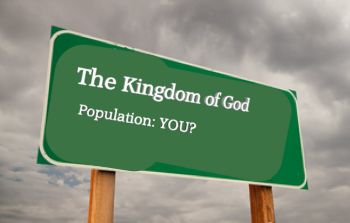 One
also makes a positive
affirmation to achieve this noble goal. Most Christians are not
taught this principle. By thinking positive thoughts and saying positive
words, we can subconsciously affect all of our life goals and
beliefs. Activities as simple as taking the survey
at the top of the page, by "Liking"
our two Facebook
pages, or making a post on our other
Facebook page
can go a long way to not only helping us to affirm and achieve our
goal, but also to inspire others to achieve that same goal. It
is a win-win situation that God will be watching. One
also makes a positive
affirmation to achieve this noble goal. Most Christians are not
taught this principle. By thinking positive thoughts and saying positive
words, we can subconsciously affect all of our life goals and
beliefs. Activities as simple as taking the survey
at the top of the page, by "Liking"
our two Facebook
pages, or making a post on our other
Facebook page
can go a long way to not only helping us to affirm and achieve our
goal, but also to inspire others to achieve that same goal. It
is a win-win situation that God will be watching.
Finally, one becomes inspired to preach the
kingdom of God, as Jesus did and as He
instructed His
followers to do. We each can do this in our own unique way. Paul said,
"...you
ought to be teachers." Read
Christian in
Name Only. Check out how you can
personally
preach the gospel of the kingdom of God through Facebook,
reaching one third of the world.
This is truly our highest calling in life. It is our
"ultimate reward!"
It
is my hope that this article will help inspire an understanding that
results in changes to the lives of today's Christians — and that all of
today's Christians might eventually be considered for
the kingdom of God and the first resurrection!
Ken
N.
January
1, 2009
|
Summary
-
The kingdom of God (aka, the kingdom of heaven, because
at this time it is in heaven) is a specific entity that will
commence at the first resurrection and the second coming
of Christ. There is no heaven or hell after death. But
there is a first and second resurrection of all of
humanity. All have been saved.
-
Those who are chosen to participate in the first
resurrection (as spirit beings teaching
and ruling) will reign with Christ for 1,000 years over
the rest of mankind. They will be part of the God
Family in the Kingdom of God.
-
Selection will be made according to:
-
Their
attitude
towards God, the Bible and learning.
-
Their life of charity, teaching, sacrifice, success,
etc.
-
Their character record based on the biblical fruits
of the spirit.
-
Their love of God's word as revealed in the Bible.
-
Their teachability, as revealed in their lifetime
track record of seeking out, grasping and implementing
new knowledge and concepts, both biblical and
non-biblical.
-
Our
(non)
commission
(page 4, #6) for today's Christians who are planning on
being in the kingdom of God (from Dr. Martin):
I am not saying we are
commissioned like the Apostles. There is no commission
in the Bible that Ernest Martin has to do anything. But
I know who I am. Do you know who you are? You are the
child of the living God. If the Holy Spirit of God is
within you — and it is — look in the mirror and say, “I
am a member of the Family of God,” you do not need any
commissions to do the job. Just do it! Take the message
to every one you can. You do not need a commission.
(Anyone given a commission to do something had better do
it exactly!) You have no commission to do anything —
except — to read the scriptures that God’s message will
be taken to the ends of the earth. If you do not do it,
an angel could do it. If an angel does not do it, Christ
says the very stones will cry out saying who He is (Luke
19:40). My book,
Essentials of New Testament Doctrine,
explains in detail just who you are, why you are here,
where you are going, and the responsibility that God the
Father and Christ has given to you. ELM
-
"And he sent them to preach the kingdom of God, and to
heal the sick."
Luke 9:2
|
Check out additional
ASK
articles on the
kingdom of God and the
first resurrection.
Kingdom
of God
—
Here Now or Yet to Come?
audio lecture by Dr.
Martin
Read this article
on the
first
resurrection from the BibleResearch.org
Read about God's
blinding of our eyes and hardening of our hearts.
Looking
for an
ekklesia
that teaches the kingdom of God?
The Bible mentions the "kingdom of heaven"
32
times
Biblical examples to preach the
"kingdom
of heaven"
The Bible mentions the "kingdom of
God"
69
times
Speaking
in tongues and other church anomalies
God's Purpose
—
You Are the Temple of God
Marriage
and the Family in the Resurrection
Kingdom
of God
audio lecture by Dr. Martin
Knowledge,
Understanding, and Wisdom
38 Bible verses on the
"kingdom of God"
Kingdom
of God vs Kingdom of Heaven
Paul's Take on
the Kingdom of God
Why reading the
Bible is important
Salvation
and the Kingdom of God
Our
(non)
commission,
page 4, #6
All
Prophecies Happen in Threes
The
Exact Time of Christ's Return
Visions and
Dreams in Prophecy
How God Reveals
Himself to Us
Resurrections from the Dead
The Second Thousand
Years
Restoring
the Original Bible
Suppression of
Evil by God
Strife Within the Eklessia
Free Will vs Free Choice
ASSOCIATES
ONLINE
Christian in
Name Only
Pandemic
Repentance
Who are
the 144,000?
Losing Your
Salvation
Your Life Is A Mystery
Prophetic
Predictions
End-time Prophecies
Our Ultimate
Destiny
The Dead
Are Dead
The Rapture
Theory
Scripture
on Desire
Just
Who Are You?
Biblical
Alkalization
Signs and Miracles
Your
Resurrection
What Is
Important
Award
vs Reward
Are You A
Misfit?
Are We All
Mad?
Search
This Site
God's Thoughts
Rapture
Fallacy
Satanic Empire
Who Is
Jesus?
Family of God
Paul vs Peter
All Are Saved
Good Health
Itching Ears
The Mystery
Golden Age
Born Again
Masculinity
Contact Us
Illuminati
Lazarus
Trinity
Search
This Site
Home
|